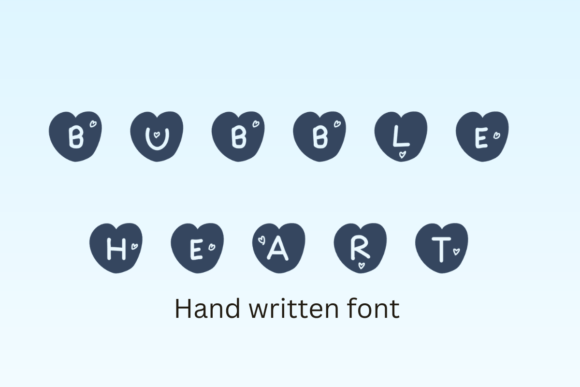
Bubble Heart Font: A Playful Display Typeface for Brands
When I started my handmade candle business, I quickly learned that the right font does more than just spell out a name. It sets a mood, tells a story, and makes a first impression before a single word is read. Bubble Heart is one of those rare display fonts that combines warmth, whimsy, and a gentle romance, making it a versatile tool for small business owners who want to feel approachable without looking unpolished. It’s the kind of typeface that wraps your brand voice in a soft hug, and for many entrepreneurs, that emotional connection is exactly what turns a casual browser into a loyal customer.
What Bubble Heart Brings to Your Brand
Bubble Heart falls squarely into the display font category, meaning it’s designed to be noticed. It has rounded, balloon-like letterforms with a subtle bounce that feels handwritten yet intentionally crafted. There’s a sweetness to it, but not in a childish way that limits its use. Instead, it carries a modern, cheerful personality that works beautifully for brands centered around love, family, celebration, and everyday joy. Think of a bakery that wants to feel nostalgic but fresh, or a hair accessory line that sells at weekend markets; Bubble Heart helps you speak directly to the heart of your ideal customer.
The mood is friendly, hopeful, and slightly romantic. The letters gently curve, and the negative space inside each character feels generous and airy. This makes it readable at larger sizes, which is exactly where a display font shines. It’s not designed for long paragraphs of tiny text, and that’s a strength, not a weakness. It commands attention when used thoughtfully, giving you control over where your customer’s eye lands first.
Real-World Business Touchpoints Where Bubble Heart Works
As a small business owner, I’m always thinking about how a design asset will actually perform across the dozen places my brand shows up. Bubble Heart integrates seamlessly into customer-facing materials when you treat it as your visual voice for headlines, accents, and brand marks.
For product labels and packaging, this font brings a handmade, boutique feel that elevates simple jars, boxes, or tissue paper wraps. Imagine a honey jar with a kraft label, a clean sans serif for the details, and the product name in Bubble Heart. Suddenly it feels like a gift rather than a pantry item. The same approach works for candle tins, soap sleeves, or small-batch jam labels. Even on a clear sticker, the rounded shapes stay legible and friendly.
Menus and in-store signage benefit from that same charm. A café can use Bubble Heart for the daily specials board or the name of a signature latte. It softens the hard surfaces of a counter and invites people to linger. The font’s personality tells the customer that this is a place that cares about details, not a chain that ordered everything from a catalog.
For social media graphics, the impact is immediate. Instagram posts, Pinterest pins, and Facebook cover images all fight for attention in a crowded feed. Bubble Heart helps your text-based designs stop the scroll. Use it for inspirational quotes, sale announcements, or new product reveals. Its bold, rounded strokes remain crisp on mobile screens, and the emotional warmth translates well even when someone is quickly tapping through stories. I’ve found that posts featuring a friendly display font like this often get more saves and shares because they feel personal rather than promotional.
Website banners and email headers are another strong application. Because Bubble Heart is a display font, it’s ideal for hero images and headline text where you want to reinforce your brand personality instantly. Paired with a legible body font, it creates a visual hierarchy that guides the visitor without overwhelming them. Even a simple “Welcome” or “New Collection” becomes more inviting.
Building a Recognizable and Trustworthy Look
Consistency is one of the hardest things for a solo entrepreneur to maintain, especially when you’re wearing all the hats. Fonts can silently do a lot of that heavy lifting. When a customer sees Bubble Heart on your business card, then on your product label, and later on a thank-you card tucked inside their order, it builds recognition. That repetition signals reliability. Over time, the way you present your words becomes as familiar as your logo. People start to associate those cheerful, rounded letters with a positive experience they’ve had with your brand.
Professionalism doesn’t mean stiff or boring. A display font like Bubble Heart can feel polished and thoughtful when it’s used with intention. What often erodes trust in a small business is a chaotic visual identity where every material looks like it came from a different company. Locking in one core display font for your headlines and key brand elements gives you a thread that runs through packaging, social posts, and your website, tying everything together quietly but effectively.
Practical Examples Across Industries
Over the years, I’ve watched how the right typeface choices change a business’s trajectory. Here are some realistic scenarios where Bubble Heart fits naturally:
- Handmade bakery or dessert shop: Use Bubble Heart for the main logo, cake topper tags, seasonal menu headers, and social media quote graphics. It complements photos of frosting and sprinkles beautifully.
- Beauty and self-care products: A lip balm, bath soak, or solid lotion line can use the font on jar labels and pouch packaging. It adds softness without feeling overly feminine or exclusive, making it gender-neutral enough for modern wellness brands.
- Wedding and event businesses: A coordinator or invitation designer can use Bubble Heart for things like welcome signs, seating charts, or envelope liner designs. It reads as romantic but stays clear enough for guests to find their table.
- Children’s boutique or learning materials: From clothing tags to activity book covers, the approachable letterforms are easy for young eyes to process while still looking like something a parent would happily purchase.
- Coaching or lifestyle blogging: A life coach or creative mentor can use the font for freebie workbook covers, Instagram story templates, or digital download thumbnails. It keeps the vibe uplifting and human.
The common thread is that each of these businesses sells not just a product or service, but an emotion. Bubble Heart amplifies that emotional signal without words.
When to Use Bubble Heart as a Headline, Logo, or Accent Font
Knowing where to place a display font is crucial to making it work hard for your brand. Bubble Heart excels in three main roles:
As a logo typeface, it creates a warm, ownable wordmark for businesses with short names. I’d recommend testing a few variations. Sometimes all lowercase feels too casual; a mix of uppercase and lowercase can add a bit more structure while keeping the personality. If your business name is longer, you might use Bubble Heart for the main word and a simple sans serif for the tagline beneath it.
As a headline font, it sets the tone for landing pages, blog post titles, and signage. A single line of Bubble Heart can carry a lot of visual weight. I often set it at a generous size with wide letter spacing to let the rounded forms breathe. On packaging, a headline like “For You” or “Made with Love” becomes a design element all on its own.
As an accent font, it adds surprise and delight in small doses. I use this strategy a lot: body copy in a clean serif, subheadings in a semi-bold sans serif, and then a little badge or stamp in Bubble Heart that says “New” or “Special Edition.” That tiny pop of character brings a smile without distracting from the important information.
Considering Readability Across Formats
One concern I always hear from business owners is whether a decorative font will be legible enough for practical use. The answer depends entirely on how you handle it. Bubble Heart has a generous x-height and open counters, which means the shapes stay distinct even when scaled down a bit, but I wouldn’t recommend it for body text below 12 points or for dense paragraphs.
On small product labels, test first. If your ingredient list is lengthy, keep it in a clear serif or sans serif and reserve the display font for the product name or a single line. On circular labels, the rounded letterforms actually echo the shape nicely, which helps with balance. On mobile screens, large headline usage works well; avoid putting it in navigation menus or tiny button text where it can become blurry. Printed materials like thank-you cards or postcards give you the most control, because you can hold a proof at arm's length and check if the words remain readable.
Social media thumbnails demand big, bold text that can be read at a glance. Bubble Heart’s thick, even strokes hold up well at small sizes on screens, but I always recommend converting text to outlines or using high-contrast colors to ensure it pops against busy photo backgrounds. A light pink or soft cream overlay often does the job.
Testing the Font Before Committing
Before you rebrand an entire product line, take a week to test. I like to create five or six quick mockups with real content: a product label, an Instagram post, a thank-you card, a website header, and a small sticker. Print them out if you can. Look at them on your phone at different brightness levels. Ask a couple of friends what they feel when they see them. Do the words read as genuine or forced? Does the font still look appealing after you’ve stared at it for days?
I’ve made the mistake of falling in love with a typeface only to realize it wouldn’t scale across my materials. With Bubble Heart, the key is to check how it interacts with your other brand colors and textures. It tends to look best with softer, pastel palettes, but it can also create a charming contrast against dark matte backgrounds or kraft paper. The testing phase is your chance to see if the emotional fit is right for your specific audience. A wedding planner might want it to feel elegant, while a candy shop needs it to feel fun. Slight adjustments in color and spacing can tip the vibe in either direction.
Simple Font Pairing Ideas
Pairing a decorative display font with the right supporting typeface is what separates a cohesive brand from a cluttered one. I’ve found that Bubble Heart works beautifully with:
- Clean sans serif fonts: Think along the lines of an open, geometric sans with even stroke widths. This creates a friendly, contemporary look without competing with the bubbly character. It’s my go-to for website body text and product descriptions.
- Readable serif fonts: A classic, light serif can add a touch of sophistication. The contrast between the rounded playfulness of Bubble Heart and the refined structure of a serif face often suits beauty or lifestyle brands well.
- Simple handwritten or script fonts: But be careful not to double up on too much personality. If you use Bubble Heart for the main headline, keep any script accents very minimal, like a single word in a plain italic. Too many decorative elements can feel messy.
The goal is to let Bubble Heart be the star when it appears. I limit myself to one or two supporting fonts at most, and I keep their job strictly informational. When the display font takes center stage, the other typefaces become the supportive background, ensuring that everything feels intentional and unhurried.
The Business Side of Choosing a Commercial Font
Before you fall in love with Bubble Heart and plaster it on every surface of your shop, there’s a practical step that many first-time entrepreneurs overlook: licensing. Fonts used for commercial purposes, whether on product packaging, merchandise, client projects, or digital downloads, almost always require a commercial license. The standard desktop license you might use for personal projects or internal mockups rarely covers selling items with the font on them.
I always advise fellow small business owners to read the font licensing terms carefully. Look for what’s allowed regarding logo use, embedded text in PDFs, use in templates you sell, and the number of users or devices covered. If you plan to create products where the font itself becomes part of what you sell, like a digital quote print or a logo design for a client, make sure your license explicitly permits derivative works or extended commercial use. The small investment up front protects you legally and gives you peace of mind as your brand grows.
Bubble Heart, like many premium display fonts, offers specific licensing tiers. Taking the time to understand those terms is part of running a trustworthy business. It’s about respecting the creator’s work and ensuring your own brand foundation is solid.
Why a Thoughtful Display Font Matters
A font is never just a font. In the hands of a small business, it’s a quiet ambassador that works at every customer touchpoint. Bubble Heart gives you a way to feel more human, more accessible, and more deliberately designed. When I use it in my own materials, I notice that people linger a little longer on my product photos and comment more on the details. In a marketplace where impersonal transactions are the norm, that emotional connection is something worth building, one letter at a time.
I’ve come to think of display fonts like Bubble Heart as the spark that starts a relationship. The customer sees something that feels warm and familiar, and they lean in. Then the quality of your product and service keeps them there. That’s how a tiny typeface choice can ripple into real loyalty.